At the beginning of the school year, I focused a lot on individual learning styles and ways to practice that work for each individual. More recently, our focus has been on group work. Our school's virtue of the month for March is Cooperation, and this is a good time to find ways to learn together, with lots of group explorations and assignments. Our review for upcoming vocabulary and grammar quizzes has also been in groups, using two review games:
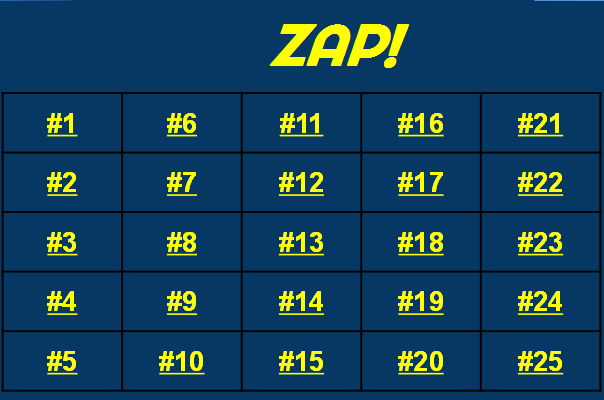
Activity: ZAP
How I used it:
I put students in groups and gave each group two whiteboards. I asked the class a review question (normally the translation of a vocabulary word or a sentence.) The first group that had the answer up (and correct!) got to choose a number from the Zap board - and scores were changed accordingly!
Will probably work well for:
- Spur-of-the-moment practice - all you need is the online template, and whiteboards.
- Groups with good teamwork and generally good behavior, and who love a competition!
- Student-chosen groups, since the end scores are less a result of correct answers and more a result of blind luck (based on the numbers chosen!)
- Any classes that are already loud and chaotic, since this can get pretty crazy - especially with the random swapping of scores!
Tips for success:
- To make sure everyone gets a chance to participate, require that students rotate the board among their group members - or require that all team members have a board and all have the correct answer!
- Require students to request numbers in the target language.
- If groups are too chaotic, play with individual students, each with their whiteboard, and randomly select a student each round to give their answer. (Choose from a jar of sticks, etc.)

How I used it:
I used Flippity's amazing template to created leveled questions related to what we were studying - Verbos y Opiniones and Ser vs. Estar. It is time consuming to come up with 30 separate items, but once you type the questions and answers into the online template, it automatically creates a Jeopardy-style quiz show. You click on the numbers to pick questions in each category and difficulty level, and click buttons to choose teams that answered correctly or incorrectly - the site keeps track of scores automatically. (You can add or delete teams, edit team names, and adjust scores as needed - for example, I give bonus points for the first teams ready to play, and take off points for things like off-task behavior or misuse of supplies.)
Will probably work well for:
- Mixed level groups: I made sure to distribute my native speakers evenly throughout my teams.
- Carefully leveled items: I put items using new vocabulary (or that included written accents and other common mistakes even for my native speakers) in the 500 spaces.
- Test preparation: You can even try out some new test items.
- Spur-of-the-moment practice, since you need to create the questions.
- Student-chosen groups, if you have a wide variety of language levels in one class.
- Make sure every member of the team writes down the answer correctly - this requires the groups to check in with their team, and makes sure everyone is getting practice (even if one team member is significantly stronger in the language.)
- Don't have teams hold their boards up right away, or it's too easy to copy other scores. I give a countdown to finish up, and ring a bell. You can also randomly choose a team member to show you their board. (It's pretty easy to sneakily add a missing letter or accent!)


