Showing posts with label culture. Show all posts

Tuesday, October 30, 2018

Tata's Gift: ¡Culturazo!

Another lesson for Día de Muertos... or other times, since this is pretty versatile. Show this 7 minute short video from Los Cenzontles (which I discovered via the ever-amazing Zachary Jones!)


Connections:

  • Cultural identity
  • Traditional visuals & music
  • Día de Muertos
  • My favorite - adding -azo to the end of words in Spanish!

I've used this to kick off leveled writing prompts:

  1. Beginner: Write a list of symbolic articles that someone might give you.
    Un libro, una foto, una guitarra...
  2. Intermediate: Write a list of symbolic articles that someone might give you, and why.
    Un libro, porque tenemos muchos libros.
  3. Advanced: Write a few paragraphs about symbolic articles that someone might give you, and why. (Using conditional or other targeted grammar patterns.)
    Mi familia me daría un libro, porque en nuestra casa siempre tuvimos muchos libros. Todavía recuerdo cuando mi mamá me enseño a leer y la primera vez que podía leer una frase entera en un libro.
Here's the sheet I used with my high school elective class, which has mixed levels (and could probably be left as sub plans.)

Monday, October 22, 2018

La Misma Luna: Resources for the Spanish Classroom

Oh hey! Remember me?

I fell off the blogging bandwagon because I got too devoured by teaching to do much reflecting or sharing. (I still have managed to reflect on the end of my teaching at the end of each year, however... year 10 is in the bag!)

After teaching Spanish for years, I've transitioned into a new role at a new school, so this blog may adapt with me.

For now, however, I wanted to share some resources for the movie La Misma Luna, since some teachers were asking for resources on Facebook.

I love this movie. A student recommended it to me years ago in Detroit and ever since I've watched it with a wide range of 5th-8th grade students. I haven't had a single student not like it. Even the grumpy ones. More than that, it personally has held up to many, many viewings. I still enjoy watching it with my students and still cry every time. It's become even more meaningful since moving to a border community, with border and immigration issues prominent in the news.

Bonus: Want some easy sub plans that would work for almost any grade level and language level? Use this movie. If you need a last minute solution, here's a pretty generic packet that should last two class periods... because we've all been there. If you are not in the desperation stage of throwing together sub plans while deathly ill, keep reading and customize this for your particular students and program.

(Not quite) Spoiler Alert: This scene elicits screams every single time.
It's also at a perfect cliffhanger spot to stop. Soy cruel. ;)

Stats:

1 hour and 49 minutes. If you have hour long classes you can squeeze it into two. I almost always use 3 or 4 class periods. so we have time to talk about the movie, do follow up with vocab, and so on.

Access to the movie:

This movie was on Netflix for a while but as of this post it is not. You can buy the DVD on Amazon (if you use that link, I'll get a few cents) or borrow it from your library. Personally I think it's worth having a copy. I've used that DVD more than any other over the years. I strongly suggest not buying the video streaming via Amazon, as you don't have the same language controls. 

(If Amazon fixes this or you know of a way to adjust language settings on Amazon streaming, let me know!)


Parental concerns:

The movie is rated PG-13. For students younger than 13 I send home something like this. I've only had one parent ever not want their kid watching the movie. (I have a collection of alternative materials, in case.) Here's more info from Common Sense Media.


Activities:

In the olden days I used to have students answer comprehension questions, but eventually I found that I didn't need comprehension questions to keep students focused on the movie. I preferred to target language and culture, so switched to doing activities that connected to specific language objectives and needs for each class. Here's a bunch of activities that I've used. Usually I just print out relevant pages for a packet, or print out a variety of combinations for less homogenous levels. (For example, for a description of scenes and characters have several different versions for different levels, marked by chili peppers depending on how "spicy" they are.) Use whatever works for you!

The alternate endings is the newest addition to this collection of activities and has been the most fun, because it allowed students to use the energy and outrage that is always generated by the ending of the movie (no spoilers!) Even the most beginner students could use the language to get creepy and weird. (¡Carlitos y Rosario se casan! Rosario trabaja para la migra!) You could definitely adapt this to grammar structures your students are using.

More resources:


  • Superman es ilegal - Follow up activity with a song by Los Hermanos Ortiz from the movie. 
  • A las tres - Activity with another song by Los Enanitos Verdes (with a related theme of family and immigration.) 
  • A few different Quizlet sets related to the movie (I like playing a quick Quizlet Live as a way to review or preview vocabulary. 
  • Practice test for the questions asked in a naturalization interview. Can you and your students pass?
  • If you have PearDeck, use it for students to describe characters.


Sunday, May 1, 2016

Lunes de Lectura: El Día de los Niños

I've been buried in projects so haven't been sharing much here. Recently with my 7th and 8th graders I've been trying to fit in some skill-based mini-lessons and practice alongside some of our longer projects, so each week as a warm up we've been doing Lunes de lectura and Jueves de Juegos. (Well, for half of my classes. For the others it is Martes de Lectura / Viernes de Diversión - not quite as catchy.) I've been pulling readings from Newsela (they now have articles in Spanish, adjustable by lexile!) and shorter thematic reading exercises using Zachary Jones' Twiccionario.

For tomorrow we will be reading this short article about El Día de los Niños. I thought I'd share my modified and annotated version, along with comprehension questions.


(I'm going to introduce this with watching Irene, a fantastic short by Alejandro Hiraldo. I happened upon lots more resources from Aprendemos Juntos and definitely want to expand on this later!)

Thursday, December 17, 2015

2 Anuncios Navideños

I'm guessing most of you teachers in the US have one more day left before break. Here's a quick listening activity using two holiday ads from Spanish-speaking countries.

(Kids might need some hints for figuring out the country for the first video - this article listing the many names of a mysterious gift-bearing man might contain a clue!)

Enjoy!

Anuncio 1: ¿Cómo se escribe...? (Jumbo)

Anuncio 1: ¿Cómo se escribe...? (IKEA)

Sunday, December 13, 2015

Quick linguistic comparison: Spanish vs. Arabic

About a year ago I shared the Ocho Kandelas song in Ladino as a quick lesson tying together Spanish history, linguistic comparisons, and Hannukah traditions. This year I'm using this song again, but am also sharing this quick video comparing Arabic and Spanish:


Here's a listening worksheet I made for with the video. (Any readers who speak and write Arabic, feel free to correct my Arabic transcriptions... I used wordreference and my dubious familiarity with the Arabic alphabet.)


This quick look at Ladino and Arabic have been a quick a chance for my students at all grade levels (3rd through 8th) to see how knowing one new language can help them with understanding others. It ties in well with our discussion of historical religious conflict in Spain, and even current events. (I've tried very hard to remain politically neutral, but when I told them about Jews and Muslims being kicked out of Spain, an entire 3rd grade class started yelling about a certain political candidate who is big in the news these days...)

I love nerding out about language learning with my students! I've been trying to learn Arabic for a few years, as my third language - not rigorously enough to gain any kind of fluency, as I learned during a trip to Morrocco where the only phrase I could consistently remember was an unhelpful "She drinks coffee." Maybe this lesson will give me the push I need to pick up my language studies again. I find it very meaningful to be a language learner along with my students.

Edit: Just read the news about Augusta Co. schools. Be careful where you teach this - yikes!

Tuesday, October 27, 2015

Día de los Muertos - Resources you can use tomorrow

I'm finishing up some sub plans for upcoming absences, and let's be honest - this is the time of year where many teachers need some sub plans even if they aren't going to be absent. By that I mean: you're so swamped by parent emails, test administration, professional learning, and preparing for parent conferences that planning time is limited. (Also, Halloween is coming up this weekend, so kids are going to be a little distracted.)

I feel fortunate because as a Spanish teacher, I can use this time of year for some cultural lessons connected to Day of the Dead - something that's meaningful and engaging, even for burned out teachers and sugared up students.

I figured I'd reshare one of my favorite and most versatile Día de los Muertos resources - this brief digital short that's touching, really encompasses a lot of traditions, and is engaging for all ages. (I've used it successfully from everyone K-8.)


Some things you can do with this video:
  1. Focus on listening and reading! Learn more about Movie Talk here (including a demo by Martina Bex.) See some slides with stills that I put together to talk through the story (it was just clearer than pausing the video for me.) I also use a written text with vocabulary questions at the end. (I started with Dustin Williamson's as an example, but changed it to present tense and edited it to make it fit with my students' needs.) 
  2. Cultural focus: Show the video as an intro to the traditions involved in Día de los Muertos and have students compare and contrast it with traditions in their own families. Here is a packet of information I've used.
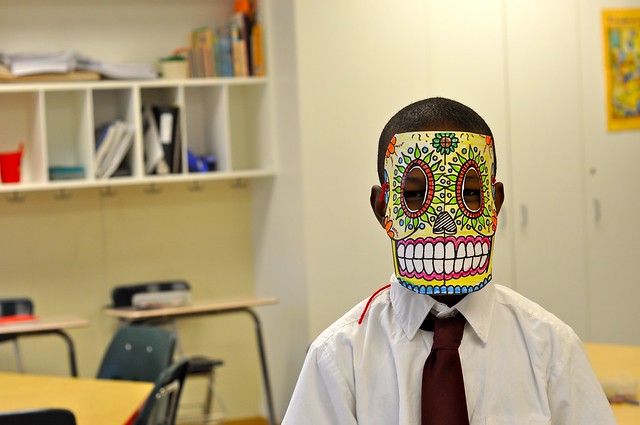
  3. Follow up: Depending on how much time you want to spend and the grade level of your students, follow up with one of these resources or a simple calavera mask using one of HappyThought's free templates or the one from AZ Central's teacher packet.

¡Buena suerte!

Día de los Muertos
A mask using AZ Central's template.

Sunday, October 25, 2015

Calaverita - La Santa Cecilia

It's that time of year again!

Untitled
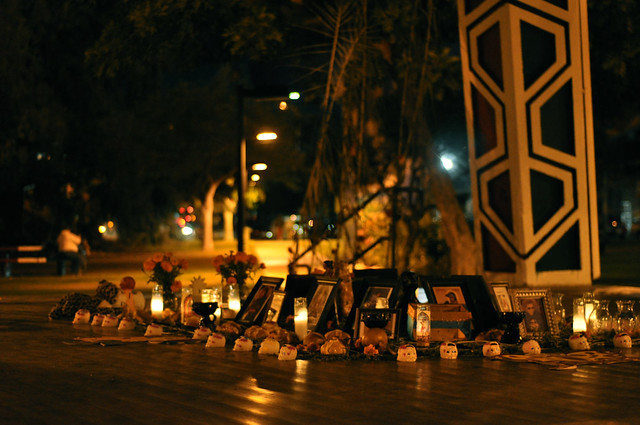
Chicano Park - Día de los Muertos, 2014

I have some absences coming up due to training, jury duty, and out of town weddings, and so I'm trying to come up with sub plans that are engaging. Luckily, it's Day of the Dead season, and there are lots of resources out there! Last year I shared some of the resources I've used, and a list that I've added to since then.

I just bought the Book of Life movie, which was released last year. I'll be leaving that with my sub plans. While researching resources for the film, I stumbled across a newly released song by La Santa Cecilia from nearby Los Angeles. I'm definitely going to use this to introduce the holiday and set the stage for when I'm gone.


I love so many things about this video. It includes many traditional Día de los Muertos symbols, as well as some not-so-subtle references to current events (did you catch Zombie Trump?) Most importantly, it conveys the spirit of the holiday and the underlying attitudes toward death.

It was Kara Jacobs who pointed me to this song and compiled several great resources. I will be using a revised version of the lyrics she posted, with questions that fit with my diverse student levels.

If you'd like a copy: Google doc here, or as a PDF here.

Tuesday, June 9, 2015

Chicano Park

Untitled
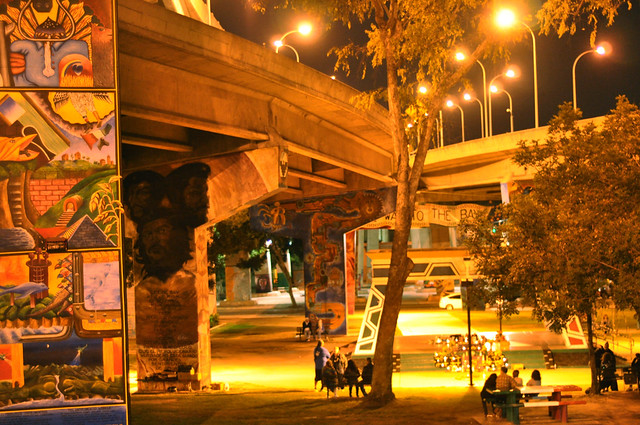
Chicano Park - Día de los Muertos, 2014 (My first visit to the park.)
Earlier this month I had the chance to go with the 6th graders to Chicano Park here in San Diego. The field trip was part of a really cool cross-curricular Social Justice project that they were doing in their other classes. Next year I want to integrate a lot more connections in my Spanish class, but I was really excited to go along this year, and I want this to be an ongoing part of my Spanish curriculum.

Back in Detroit, I collaborated with the art programs at both schools I worked at, to take field trips to the Detroit Institute of Art, especially to see Diego Rivera's mural. It's an amazing mural with significant ties to local history and culture, and I was sad to leave it behind when I moved to California.

Since I moved to San Diego in August, I've been looking for local opportunities. Chicano Park has an amazing history and is the perfect place for students to learn about art, the local Spanish-speaking community, our identity as a border town, alternative histories, and an inspiring example of grassroots movement and personal activism that they are studying through their Social Justice project.


We got a great tour by members of the park's steering committee. My group was led by Victor Ochoa, one of the muralists. I learned as much as the kids did!

Before going on the field trip, I made this scavenger hunt for the kids. They looked for the phrases around the park and matched them to the murals they were included on, and then later in Spanish class we translated them and connected each phrase to the history we had learned about. (The file includes an answer key. I made it using images from this documentation project, but I already know I'll be updating it with more images and phrases later on.)

https://www.dropbox.com/s/h8ejmkpztb8hrdu/Chicano%20Park%20Phrase%20Scavenger%20Hunt.docx?dl=0

As a follow-up project, students are researching and presenting information about people from the Spanish-speaking world. This includes famous Hispanic figures, some relatives and family members, and people they learned about during the field trip. I used one of the murals from Chicano Park as a starting point for this project, and created a Thinglink for students to explore the people and symbols pictured.


This year, the field trip, subsequent project, and curricular connections were all somewhat hasty, in the midst of end-of-the-year chaos and the general upheaval of establishing and refining a new program at a new school. I have high hopes for next year, however, and am excited to do more.

The Chicano Park Steering Committee was so helpful in coordinating and leading our tours. They have a website at www.chicano-park.com.

For local educators - if you have led field trips to Chicano Park or would like to in the future, I would love to hear more about what you have done, share resources, and collaborate!

Untitled
Chicano Park - Día de los Muertos, 2014

Sunday, May 24, 2015

Movimiento Naranja - Movimiento Ciudadano

I haven't posted much here recently. I've been busy with some exciting things (working to expand the Spanish program at our school, lots of cross-curricular planning for next year, and some end-of-the-year projects with the middle school students.)

Every year at the end of the year, I find myself trying to do things that are too complex and too long for the inevitable chaos of end-of-the-year schedules, where student and teachers alike are affected by state testing, field trips, camps, absences, and (in my case recently!) immune systems that are succumbing to end-of-the-semester stress. I'm excited about some of the projects my middle school students are doing - but a little hesitant to share before I see how they turn out.

However, I want to use this blog to reflect on what I'm doing, and to share what is working - so I'm attempting to do that, even in these last crazy weeks of the school year! Here's something that may be useful to you as the school year winds down.

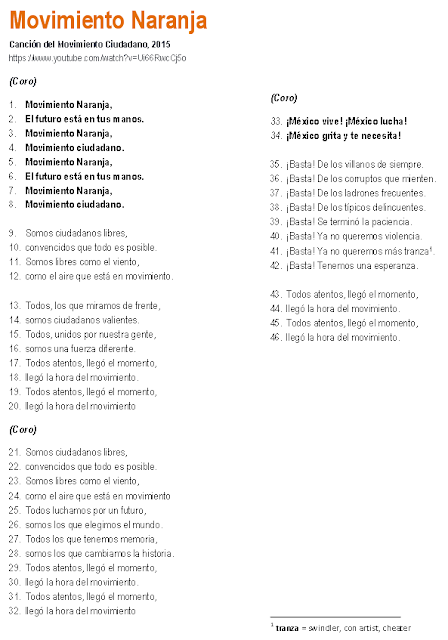
Here's a song that I heard on the radio* a few weeks ago. It was so catchy that I immediately looked it up. As it turns out, it is a promotional music video for a Mexican political party.


As a disclaimer: I am not promoting this political party or any of their campaigns. But I am congratulating them on writing a simple, catchy song with a feel-good music video that includes lots of beautiful images of Mexico. There are quite a few familiar shots for my students and I - the border fence, and scenes from our neighboring city across the border, Tijuana.

I've used this for some grammar practice in middle school, and played it for my younger students to wrap up our Mexico-focused lessons about Cinco de Mayo. (It's a good "get the classroom cleaned up" song, too.)

Thanks to the folks in the Spanish Teacher Share group on Edmodo for helping me find and correct the lyrics! Here they are, with several different activities I did with my students:
  • Cognates: Matching translations (to lines with lots of cognates)
  • Grammar/Conjugation: Ser, Estar, and Tener conjugations
  • Advanced: What does this song tell us about the party's political platform? (Led to some interesting discussion of political propaganda in middle school.)
If you find any errors in the lyrics, let me know!  Also, I haven't been able to find the name of the artist who wrote the song - do you know?


https://www.dropbox.com/s/12dcw0be2l1xvbx/Movimiento%20Naranja.docx?dl=0


*Side note: Since moving to San Diego, I've discovered a new hobby: Listening to Mexican political ads awkwardly translated into English, on the English stations broadcast from Tijuana.

Saturday, April 18, 2015

Culture in 3 Acts: Semana Santa

I started rethinking some of my cultural lessons after a colleague presented about Three Act Mathematical Stories. After getting back from break I applied the concept to a cultural lesson about Semana Santa.

My main goal was to create a very student-driven exploration of culture. The ACTFL standards ask students to explore the connections between products, practices, and perspectives of the target culture, but it's often up to the teacher to select which products, practices, and perspectives to focus on. With a large range of options, how do we choose which are most relevant and important to share with our students? One option is to let students direct the focus of those explorations. Here's how that worked out in my classes this week.

Here's a copy of the guided notes I used with my class during this assignment.

Saturday, February 28, 2015

Culture in 3 Acts: Rethinking how I teach culture

This past week during our weekly professional development afternoon, a colleague demonstrated Dan Meyer's "3 Act" math tasks, or math stories. These inquiry based, student driven math explorations seem to be a great resource for flipped classroom models and for the kind of authentic tasks and higher level thinking that the Common Core is now requiring. Thanks to the magic of modern technology, math teachers can now find and share their own "3 Act" Math tasks, with links to prompts, standards and suggested questions.

As a Spanish teacher, I immediately began thinking of my culture lessons in 3 Acts. I already try to hook students with a fascinating image or video related to what we are learning about, and I always encourage guesses, questions, and discussions... but then I usually give them the questions that I want them to answer. If those questions were things they were actually interested in, they were driven by curiosity... and if not, they were driven by the grade carrot on a stick, if anything. In re-imagining these inquiries, I was drawn to the idea of having students drive the inquiry themselves.

I would like to adjust my culture lessons and apply some of the ideas behind the 3 Act math tasks:
  • Act One: Introduce the central conflict of your story/task clearly, visually, viscerally, using as few words as possible.
    • Leave no one out of your first act. It should be comprehensible to all levels. It should, as Dan Meyers says, get all students "right in the curiosity bone."
    • Elicit questions from students, rather than handing them a list of questions.
In my colleague's demonstration, she categorized the questions elicited from students (in this case, teachers) by how much interest each question generates. Teachers can also try to pull out questions that fit with  specific objectives or standards. For culture lessons, I might leave it a little more open ended than in a math lesson, since culture standards are so broad. With that list of student-generated questions, there are some options. We could choose one question for students to focus on as a class, assign different questions to differentiated groups, or have students choose from a few selected questions that will address specific objectives.
  • Act Two: The protagonist/student overcomes obstacles, looks for resources, and develops new tools.
    • What resources do your students need to answer their questions? What tools do they need? What language do they need to answer their questions?
Teachers can try to anticipate student questions and prepare lists of resources (I often try to create differentiated lists of resources for various language levels and learning styles - I have shared some here on this blog.) However, in authentic inquiries, students need to look for information on their own. I might help students come up with authentic (and not-so-authentic) sources of information. We might brainstorm search terms in the target language. I might introduce Act 1 in the classroom, and then set students loose to answer their questions, in the computer lab or at home.
  • Act Three: Resolve the conflict and set up a sequel/extension.
    • The resolution should be a satisfactory payoff for students. (In Meyer's example task, he highlights the difference between actually seeing the basketball go through the hoop, and reading in the answer key - "The ball goes in.")
    • Have students share the answers to their questions, and their process for finding those answers.
Using the  list of student generated questions from Act 1, and further curiosity generated by their investigations, this could easily open up extension activities and "sequels."

Many teachers are used to handing students questions, along with some set tools and formulas to answer those questions. In flipped classrooms and inquiry-based lessons, it is up to the students to select the tools they need to meet their objectives... and when students generate the questions themselves (after being motivated with a fascinating hook) they will be much more eager to find the answers. As a language and culture teacher, I want to develop independent language learners... and students who can independently find new information about other cultures, fueled by genuine curiosity.

I already am scheming up some new culture lessons in this format... I'm guessing my next attempt will be some inquiries about Semana Santa, perhaps starting with this great video. I'd love to hear from others, and perhaps collaborate on a database of resources. (Math teachers aren't the only ones who can collaborate!)

Thursday, February 19, 2015

El Carnaval: A resource pile

President's Day, the Lunar New Year, and Carnival were all jumbled together at the beginning of this week.

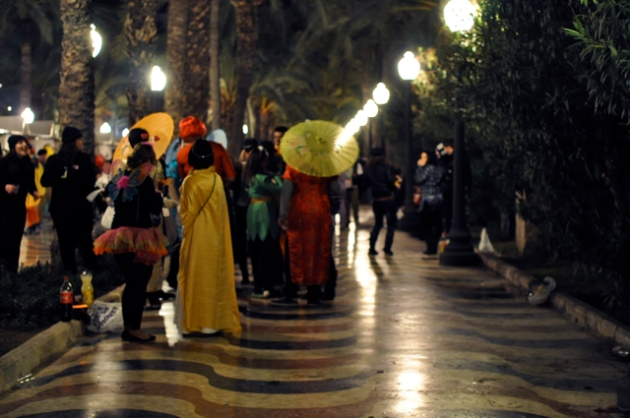
El Carnaval en Alicante, España.

My middle school classes have been working hard on other projects, so I wanted to create a somewhat independant exploration for students who were done with their projects, or for extra credit in some classes. Our schedule is a little messy right now after a 4 day weekend, so this was a fun "filler" to help get all the classes caught up.

Carnival/Carnaval/Mardis Gras is a truly multicultural topic of exploration, and there are so many great examples of colonized cultures combining (or disguising) their beliefs with newer Catholic traditions. It's also a good example of some traditions that are fun enough on their own, even without the complex historical background behind them!

This might be belated for this year, but I wanted to share some of the resources I used this year related to El Carnaval! Here is a leveled list separated by learning style, with resources in both English and Spanish.


I gave this list to my students directly, along with this paper. They could choose which resources they used to find the answers to the questions, according to their language level, learning style, and interests.


(I went paperless with some classes by creating a Google Form of these questions, too - I can share the template with you if you wish. Feel free to contact me!)

Do you have any more great resources related to Carnival? I am especially interested in expanding my knowledge of celebrations in Latin America - my only personal experience is from Spain and my own Catholic childhood.

Monday, February 9, 2015

Muñecas Quitapenas


Worry dolls are one of my favorite culture lessons for the little ones. It allows for some personal connections and relationship building, and also brings a little magic into the classroom. I have used worry dolls with kids in K-4, and as a brief cultural lesson for the older kids (usually when talking about good luck and anxiety, particularly before quizzes.)

We talk about the Guatemalan tradition of worry dolls and how they are used, and then create our own on paper. (Although much of this cultural lesson is in English, most classes can understand the basics in Spanish... and they know the animal words necessary to understand when I tell them about my childhood fear of dogs!) Kids decorate their dolls, and write what they are worried or scared about on the back of each doll. We hide all the dolls together somewhere in the classroom, and check on them the next day. Sometimes they just disappear with all our worries... and sometimes there is a note in their place that tells each student "¡No te preocupes!" (Sometimes these notes are even in color... it depends on how much time the worry dolls had, and if they could use a color printer. Worry dolls apparently don't get a lot of prep periods, either.)


Especially in the older classrooms, the students almost always are convinced that I took the dolls - but most of them say that it made them feel a little better, anyway. Students write in their culture journals comparing this tradition to the ways their own families comfort them when they are sad. 


Depending on your students, I would caution against extended group sharing what students are scared of. I always focus on sharing what makes us feel better when we are scared - not the things that scare us. (Why have these kiddos seen so many scary movies?) Back in Detroit, this lesson led to at least one referral to child protective services, based on the troubling fears one kindergartner expressed. This can be a very real window into your students' lives - and not everything there is pretty.

Some resources:

Tuesday, December 16, 2014

Lección de Navidad: Una carta al Viejito Pascuero

Another quick, ready-to-use resource that would work with even basic level students. An accompanying worksheet I made is available here, including some names for Santa Claus in various Spanish-speaking countries: ¿Cómo se escribe mountain bike?


This can connect nicely to:

  • Christmas in Chile
  • Santa Claus around the world
  • "Quería pedirte..."
  • Spelling

Monday, December 15, 2014

Ocho Kandelikas: Una lección cultural y lingüística.

Before holiday break, I like to introduce students to a variety of holiday traditions in Spanish-speaking countries. My strongest lessons involve traditions from Spain, since I lived there (and Catalonia has some pretty fascinating traditions that can truly get the attention of middle school students...) It is impossible to discuss holiday traditions in Spain without a discussion of religion, and this is always a good opportunity to compare Spain (with an official state religion) and the United States (with a strict separation of church and state.)

As a language teacher I think it is important to look beyond just the cultures and religions that are in the majority, and this time of year is a unique opportunity to expose kids to some less commonly known traditions and even languages. Many of my December lessons involve Christmas traditions, but I always use the Hanukah song Ocho Kandelas to introduce my students to Ladino.

Even very young students can compare the lyrics in Ladino to Spanish that they already know (particularly the numbers) and the song is simple and catchy enough to sing along. We talk about the (abbreviated) historical relationship between Judaism and Christianity in Spain, and why so few people speak Ladino now. We discuss languages that are endangered or rare, language education and cultural identity, and beyond. I've had some pretty fascinating discussions with kids as young as first grade.


Resources:

Print & use today:
  • Comparison of the lyrics of Ocho Kandelas in Ladino, Spanish, and English
  • Ladino - easier reading in Spanish, ready to print with comprehension questions


Sunday, November 30, 2014

El Flamenco

Granada - Ciudad Encantadora
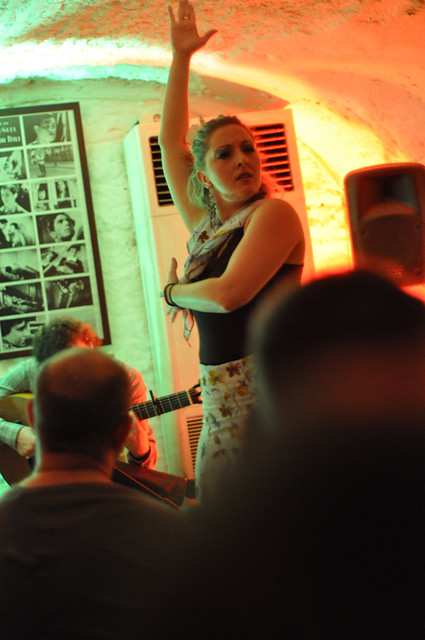
Flamenco en Granada
On the last day before Thanksgiving break, the 7th graders had dance performances during their morning P.E. class. Our P.E. teacher had students work in groups of 3 or 4 to research a specific style of dance, choose a song, prepare a dance, and practice it to perform. I got to watch a few of these, and it seems like an amazing project.

Three girls researched and performed a flamenco dance. I really wanted to see it, but I was teaching 5th grade and just barely missed the girls' performance, and caught them as they were clicking and swishing to their next class (in very clicky heels and very swishy skirts.) They offered to perform for Spanish class that afternoon, which seemed like a great way to spend the last hour before break. (Not always a time for strenuous academic effort.)

I am envisioning future Spanish-P.E. collaborations on this type of a project, especially for native speakers who could write reports in Spanish, and offer demonstrations that are kinesthetic enough for even more basic levels to understand.

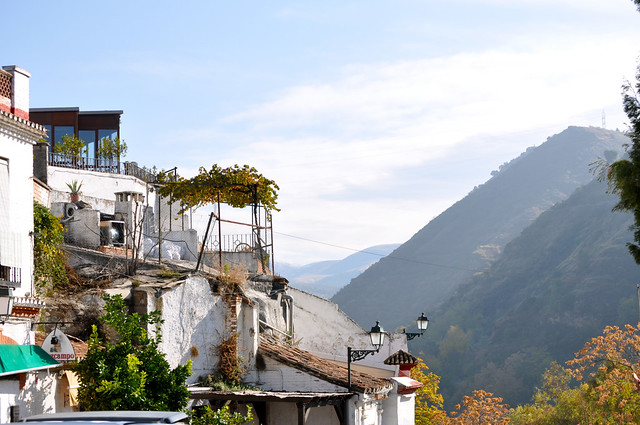
Sacromonte
Sacromonte, Granada, where many caves in the hillside hold homes, shops, and famous flamenco performances.
I've used flamenco as a quick cultural lesson before, so it was a good thing to throw together at the last minute. The girls performed their dance, and explained what they knew about the history of flamenco. (They had to write a paper about the dance as part of the project, and as a result were able to teach me a few things!) We talked about the roles in traditional flamenco, the dialect in Andalucía (cantador vs. cantaor) and the cajón, which is also the name of a main road in San Diego and of a city nearby.

I showed them one of my favorite videos - Tengo, by Macaco. They compared (using these guided notes) what they knew about traditional flamenco with this modern video.


Other Flamenco resources:

  • Notes:
    • Flamenco en España - A presentation with with some images and examples of the elements of traditional flamenco. (All slides were created using images found via google search, so these images do not belong to me.)
  • Videos:
    • Flamenco en una cueva - A performance in one of the caves in Granada, which many consider the birthplace of the dance.
    • Flamenco en la calle - Street performers in Granada. This includes the use of el cajón, and a surprise halfway through.
    • Albanico mágico - A performance in San Francisco. This is a larger-scale interpretation of flamenco, using fans. (The video is 6 minutes long, so I usually let kids watch it if they are working on their own fans.)
    • Bailando - Enrique's popular song includes lots of dance styles, including flamenco.
  • Crafts: Los Albanicos
Depending how much time I am filling with this lesson (and whether or not the classroom is unbearably warm at the time) I have also used flamenco as a connection to the tradition of fans, in the dance and in Spanish culture. For teenagers, this is a chance to learn about the use of fans as communication in the pre-twitter, pre-texting era. For young students, this is a chance to practice the fine motor skills needed to fold fans. (They will need more help than you think.) For everyone, it's an excuse to fold paper fans and have a dance party.

This is a good end-of-the-day, end-of-the-week activity, since it generally leads to kids of all ages wiggling their eyebrows at each other over paper fans for the rest of the day. (And on more than one occasion I've had to save teachers' stacks of homework and worksheets from becoming fans, once young students get the hang of folding.)


Sunday, October 26, 2014

Día de los Muertos: Resources

This is one of my favorite seasons with my students, and I have a feeling that this year I will be learning even more than I teach. As a newcomer to San Diego, I am excited to see some local celebrations, and to get input from my students who have celebrated this holiday with their families.

Here are some of the things I have done with my students in the past, and some things that will be included in my lesson plans for this week.

Let students explore some of the sights and sounds of the holiday.

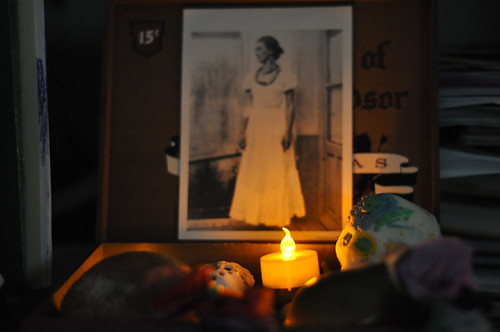
el día de los muertos

I love the opportunity to hook students with something mysterious. As a traveling elementary teacher, in past years I have put together a mini portable altar in a wooden cigar box, with a picture of Frida Kahlo (a favorite figure that most of my students learn about at some point in their time with me.) I light the "altar" with battery operated candles, and the flicker of yellow light from inside a closed box gets everyone's attention. Usually I extend the suspense and leave the box closed until we have explored some resources together, and then I will invite students to gather around and look at what is inside the box (photos, candles, flowers, sugar skulls... all things they just saw in a book or video.)

Saturday, October 4, 2014

Stress-free assessments: Two strategies

I'm not a fan of quizzes and tests. They are boring to create, boring to take, boring to grade, and often not an ideal way to assess students' language skills. In the current American educational climate, standardized tests are very much in the spotlight. They are the measuring stick used to measure students, teachers, lessons, and schools.

I have plenty of opinions about high-stakes standardized tests... but those are rants for another time. 

Among all these tests, I try my best to teach and assess through projects and communicative practice. I do use vocabulary quizzes on occasion to check student mastery of the words we have been studying. I try to make them quick, focused, and never worth more points than communicate and project-based assessments. At the very least quizzes are an opportunity to teach kids how to take assessments, especially when it comes to managing test-taking anxiety.

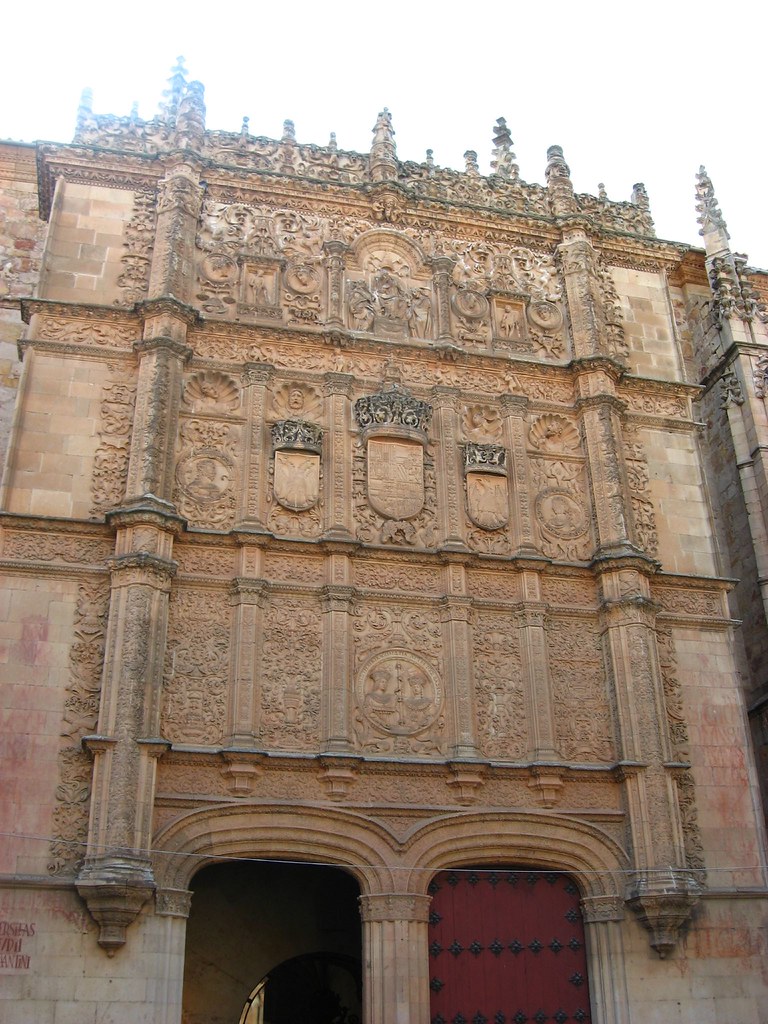
I always introduce the first quiz with a short cultural snapshot. I ask kids about good-luck tricks, and show them some pictures from Salamanca, Spain.

La Universidad de Salamanca

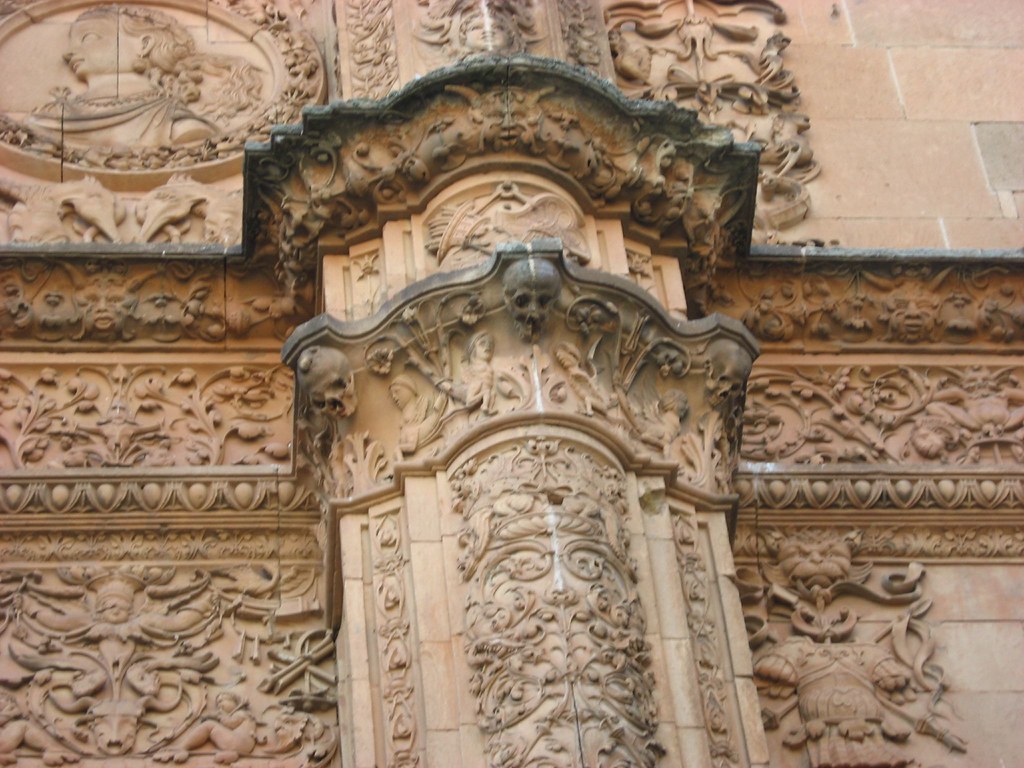
At the Universidad de Salamanca, one of the oldest in Europe, students have a tradition of searching for la rana hidden somewhere in the intricate decorations on this building. Finding the frog is supposed to bring good luck on exams and in life. I let my students give it a try - with a slightly zoomed in picture, because trying to find it on a small version projected on a screen is even harder than in real life!

Can you find it?

¿Puede encontrar la rana?
Una pista: La rana está en una calavera.
We talk briefly about good luck and whether it exists, and I remind them that being relaxed and calm before a test is important - maybe even just as important as preparing and studying beforehand. We share tips and ideas for how to reduce anxiety before testing.

Any cultural lessons about good luck charms are a good opportunity for addressing anxiety with students of any age (for example, my favorite lesson on worry dolls, or the chanchitos in Chile.) Superstitions aside, feeling calmer and more confident is always beneficial.

Another strategy I've used for years is to give students something to color after they finish. My quizzes are usually only one page, so I always put something on the back. (Middle school kids sometimes love coloring even more than the little ones.) At first I did this to reduce boredom, not anxiety, but as it turns out, there has been some research on using mandalas to reduce testing anxiety.

I usually allow students to choose an image from the stack of tests, which also helps randomize my selection of quizzes a little more. I use mandalas, or sometimes images from this book of Mexican Folk Art.

(This is also something colorful to display at home, if the grade itself isn't quite fridge-worthy.)

Gracias a mis alumnos por sus colores.
Any other ideas to combat test anxiety?