Showing posts with label spain. Show all posts

Thursday, December 17, 2015

2 Anuncios Navideños

I'm guessing most of you teachers in the US have one more day left before break. Here's a quick listening activity using two holiday ads from Spanish-speaking countries.

(Kids might need some hints for figuring out the country for the first video - this article listing the many names of a mysterious gift-bearing man might contain a clue!)

Enjoy!

Anuncio 1: ¿Cómo se escribe...? (Jumbo)

Anuncio 1: ¿Cómo se escribe...? (IKEA)

Saturday, April 18, 2015

Culture in 3 Acts: Semana Santa

I started rethinking some of my cultural lessons after a colleague presented about Three Act Mathematical Stories. After getting back from break I applied the concept to a cultural lesson about Semana Santa.

My main goal was to create a very student-driven exploration of culture. The ACTFL standards ask students to explore the connections between products, practices, and perspectives of the target culture, but it's often up to the teacher to select which products, practices, and perspectives to focus on. With a large range of options, how do we choose which are most relevant and important to share with our students? One option is to let students direct the focus of those explorations. Here's how that worked out in my classes this week.

Here's a copy of the guided notes I used with my class during this assignment.

Thursday, February 19, 2015

El Carnaval: A resource pile

President's Day, the Lunar New Year, and Carnival were all jumbled together at the beginning of this week.

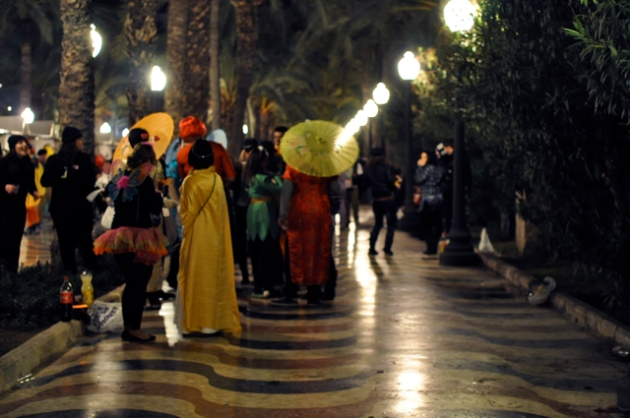
El Carnaval en Alicante, España.

My middle school classes have been working hard on other projects, so I wanted to create a somewhat independant exploration for students who were done with their projects, or for extra credit in some classes. Our schedule is a little messy right now after a 4 day weekend, so this was a fun "filler" to help get all the classes caught up.

Carnival/Carnaval/Mardis Gras is a truly multicultural topic of exploration, and there are so many great examples of colonized cultures combining (or disguising) their beliefs with newer Catholic traditions. It's also a good example of some traditions that are fun enough on their own, even without the complex historical background behind them!

This might be belated for this year, but I wanted to share some of the resources I used this year related to El Carnaval! Here is a leveled list separated by learning style, with resources in both English and Spanish.


I gave this list to my students directly, along with this paper. They could choose which resources they used to find the answers to the questions, according to their language level, learning style, and interests.


(I went paperless with some classes by creating a Google Form of these questions, too - I can share the template with you if you wish. Feel free to contact me!)

Do you have any more great resources related to Carnival? I am especially interested in expanding my knowledge of celebrations in Latin America - my only personal experience is from Spain and my own Catholic childhood.

Monday, December 15, 2014

Ocho Kandelikas: Una lección cultural y lingüística.

Before holiday break, I like to introduce students to a variety of holiday traditions in Spanish-speaking countries. My strongest lessons involve traditions from Spain, since I lived there (and Catalonia has some pretty fascinating traditions that can truly get the attention of middle school students...) It is impossible to discuss holiday traditions in Spain without a discussion of religion, and this is always a good opportunity to compare Spain (with an official state religion) and the United States (with a strict separation of church and state.)

As a language teacher I think it is important to look beyond just the cultures and religions that are in the majority, and this time of year is a unique opportunity to expose kids to some less commonly known traditions and even languages. Many of my December lessons involve Christmas traditions, but I always use the Hanukah song Ocho Kandelas to introduce my students to Ladino.

Even very young students can compare the lyrics in Ladino to Spanish that they already know (particularly the numbers) and the song is simple and catchy enough to sing along. We talk about the (abbreviated) historical relationship between Judaism and Christianity in Spain, and why so few people speak Ladino now. We discuss languages that are endangered or rare, language education and cultural identity, and beyond. I've had some pretty fascinating discussions with kids as young as first grade.


Resources:

Print & use today:
  • Comparison of the lyrics of Ocho Kandelas in Ladino, Spanish, and English
  • Ladino - easier reading in Spanish, ready to print with comprehension questions


Sunday, November 30, 2014

El Flamenco

Granada - Ciudad Encantadora
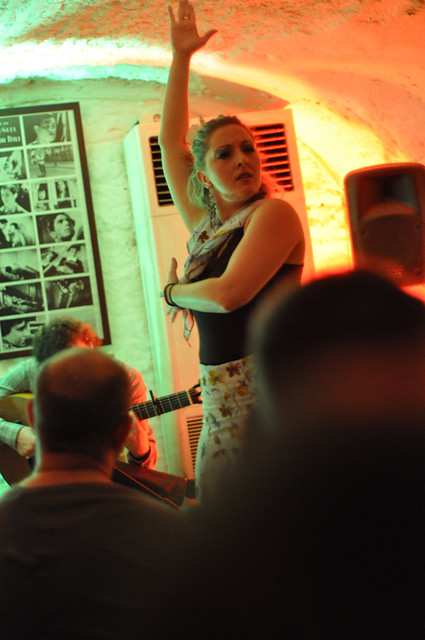
Flamenco en Granada
On the last day before Thanksgiving break, the 7th graders had dance performances during their morning P.E. class. Our P.E. teacher had students work in groups of 3 or 4 to research a specific style of dance, choose a song, prepare a dance, and practice it to perform. I got to watch a few of these, and it seems like an amazing project.

Three girls researched and performed a flamenco dance. I really wanted to see it, but I was teaching 5th grade and just barely missed the girls' performance, and caught them as they were clicking and swishing to their next class (in very clicky heels and very swishy skirts.) They offered to perform for Spanish class that afternoon, which seemed like a great way to spend the last hour before break. (Not always a time for strenuous academic effort.)

I am envisioning future Spanish-P.E. collaborations on this type of a project, especially for native speakers who could write reports in Spanish, and offer demonstrations that are kinesthetic enough for even more basic levels to understand.

Sacromonte
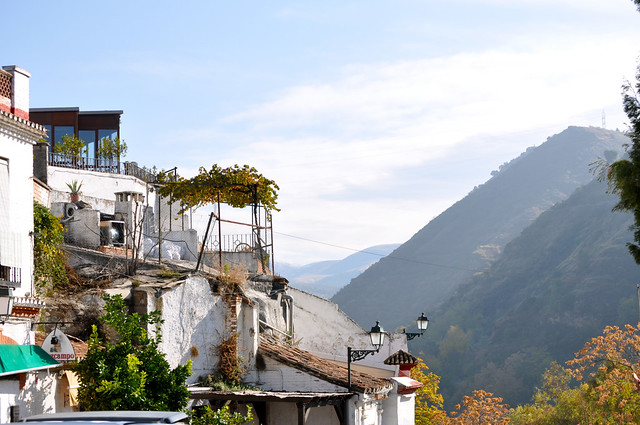
Sacromonte, Granada, where many caves in the hillside hold homes, shops, and famous flamenco performances.
I've used flamenco as a quick cultural lesson before, so it was a good thing to throw together at the last minute. The girls performed their dance, and explained what they knew about the history of flamenco. (They had to write a paper about the dance as part of the project, and as a result were able to teach me a few things!) We talked about the roles in traditional flamenco, the dialect in Andalucía (cantador vs. cantaor) and the cajón, which is also the name of a main road in San Diego and of a city nearby.

I showed them one of my favorite videos - Tengo, by Macaco. They compared (using these guided notes) what they knew about traditional flamenco with this modern video.


Other Flamenco resources:

  • Notes:
    • Flamenco en España - A presentation with with some images and examples of the elements of traditional flamenco. (All slides were created using images found via google search, so these images do not belong to me.)
  • Videos:
    • Flamenco en una cueva - A performance in one of the caves in Granada, which many consider the birthplace of the dance.
    • Flamenco en la calle - Street performers in Granada. This includes the use of el cajón, and a surprise halfway through.
    • Albanico mágico - A performance in San Francisco. This is a larger-scale interpretation of flamenco, using fans. (The video is 6 minutes long, so I usually let kids watch it if they are working on their own fans.)
    • Bailando - Enrique's popular song includes lots of dance styles, including flamenco.
  • Crafts: Los Albanicos
Depending how much time I am filling with this lesson (and whether or not the classroom is unbearably warm at the time) I have also used flamenco as a connection to the tradition of fans, in the dance and in Spanish culture. For teenagers, this is a chance to learn about the use of fans as communication in the pre-twitter, pre-texting era. For young students, this is a chance to practice the fine motor skills needed to fold fans. (They will need more help than you think.) For everyone, it's an excuse to fold paper fans and have a dance party.

This is a good end-of-the-day, end-of-the-week activity, since it generally leads to kids of all ages wiggling their eyebrows at each other over paper fans for the rest of the day. (And on more than one occasion I've had to save teachers' stacks of homework and worksheets from becoming fans, once young students get the hang of folding.)


Saturday, October 4, 2014

Stress-free assessments: Two strategies

I'm not a fan of quizzes and tests. They are boring to create, boring to take, boring to grade, and often not an ideal way to assess students' language skills. In the current American educational climate, standardized tests are very much in the spotlight. They are the measuring stick used to measure students, teachers, lessons, and schools.

I have plenty of opinions about high-stakes standardized tests... but those are rants for another time. 

Among all these tests, I try my best to teach and assess through projects and communicative practice. I do use vocabulary quizzes on occasion to check student mastery of the words we have been studying. I try to make them quick, focused, and never worth more points than communicate and project-based assessments. At the very least quizzes are an opportunity to teach kids how to take assessments, especially when it comes to managing test-taking anxiety.

I always introduce the first quiz with a short cultural snapshot. I ask kids about good-luck tricks, and show them some pictures from Salamanca, Spain.

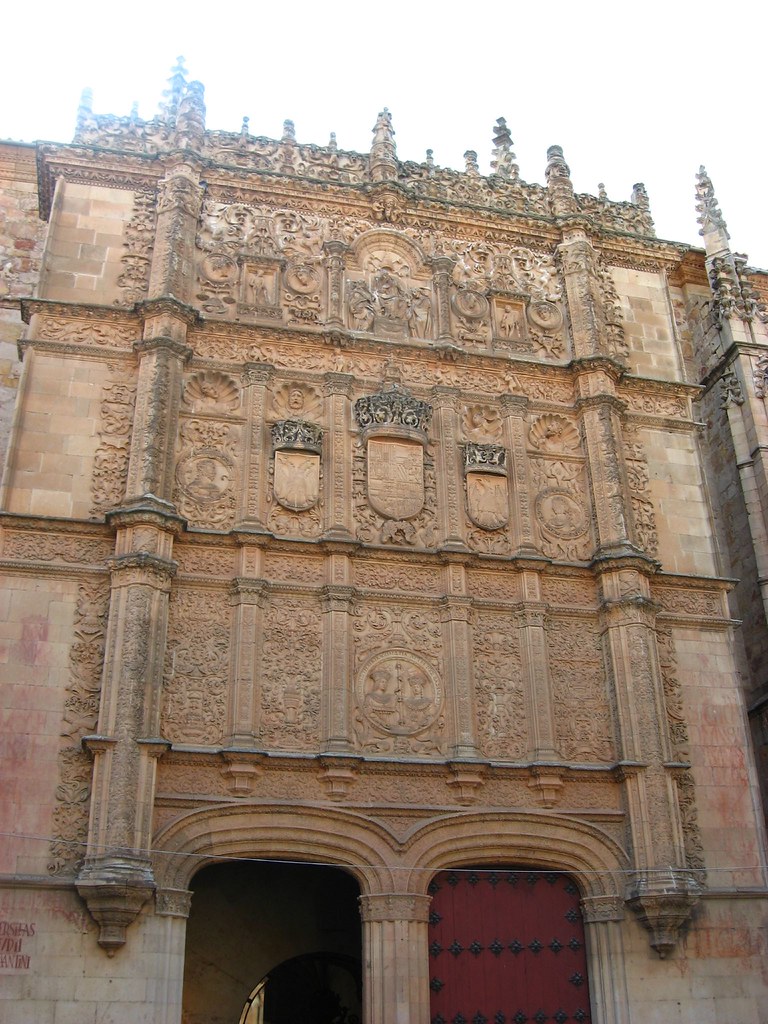
La Universidad de Salamanca

At the Universidad de Salamanca, one of the oldest in Europe, students have a tradition of searching for la rana hidden somewhere in the intricate decorations on this building. Finding the frog is supposed to bring good luck on exams and in life. I let my students give it a try - with a slightly zoomed in picture, because trying to find it on a small version projected on a screen is even harder than in real life!

Can you find it?
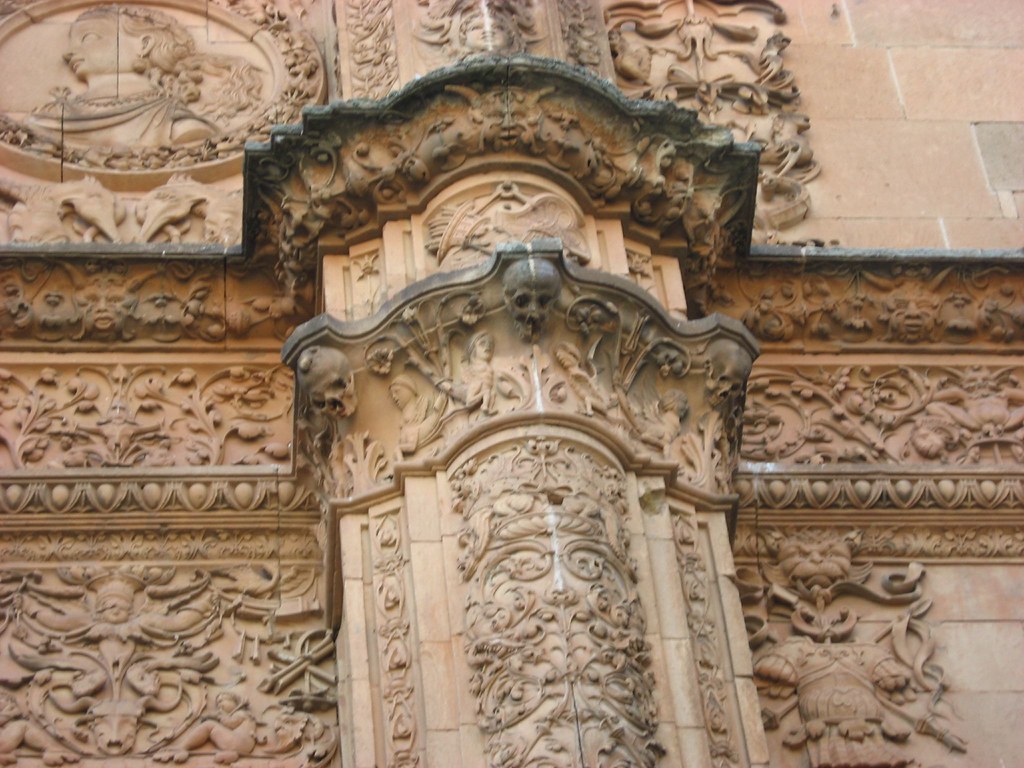
¿Puede encontrar la rana?
Una pista: La rana está en una calavera.
We talk briefly about good luck and whether it exists, and I remind them that being relaxed and calm before a test is important - maybe even just as important as preparing and studying beforehand. We share tips and ideas for how to reduce anxiety before testing.

Any cultural lessons about good luck charms are a good opportunity for addressing anxiety with students of any age (for example, my favorite lesson on worry dolls, or the chanchitos in Chile.) Superstitions aside, feeling calmer and more confident is always beneficial.

Another strategy I've used for years is to give students something to color after they finish. My quizzes are usually only one page, so I always put something on the back. (Middle school kids sometimes love coloring even more than the little ones.) At first I did this to reduce boredom, not anxiety, but as it turns out, there has been some research on using mandalas to reduce testing anxiety.

I usually allow students to choose an image from the stack of tests, which also helps randomize my selection of quizzes a little more. I use mandalas, or sometimes images from this book of Mexican Folk Art.

(This is also something colorful to display at home, if the grade itself isn't quite fridge-worthy.)

Gracias a mis alumnos por sus colores.
Any other ideas to combat test anxiety?